Showing posts with label Anime. Show all posts

Sunday, November 30, 2008

泥だんご Hikaru Dorodango


I've been working on my research paper these last few days, and watching TV for the first time in over a year since it's Thanksgiving Break Week. I was watching Mythbusters today, which is often funny, but today, they were doing something gross; polishing poo.

Yeah, they were polishing poo. The method they finally settled on to get the shine they were looking for is from Japan and is used by school children to polish mud. It is called Hikaru Dorodango and some of the efforts are fantastic! With the mud. The children played with the mud. Adam and Jamie, who are grown, played with poo.


Bruce Gardner lives in my old stomping ground of New Mexico, and has an awesome gallery of dorodango that he has made from the native soil there. He even has a page to show you how to create a dorodango on your own.


I personally love mud, I always have; but I've never heard of this craft before. In the anime Witch Hunter Robin, a little girl that the main character Robin is babysitting is making one of these dorodangos, but I assumed that the mud was shiny because the child was a witch. The little girl drops her ball by accident and starts to cry.


Now that I've seen how much work goes into making just one of these, I'd probably cry too.


Anyway, here's to an interesting new craft I'd love to try.


Thursday, November 20, 2008

YOU CAN’T SEE ME, I’M A NINJA!


Ninjas or Shinobi were serious warriors in ancient Japan, with skills that were obtained through long years of serious, dificult training and discipline. They were reviled and loved by their peers. They are no more, though Ninjitsu is taught as a serious martial art around the world.

But, they have also become huge pop culture icons, especially in America, a place where shinobi never were. There are videos:


Ninja Parade


How to be Ninja


Mythbusters - Ask A Ninja!


There are pictures:


Ninja inspired crafts like this felt ninja:


This one is crocheted:


And there are hundreds of movies, video games:


Anime and Manga such as Rurouni Kenshin, Basilisk, Naruto, Ninja Scroll, Ninja Nonsense, and Puppet Princess that feature ninja or they are the main characters. There are shirts, pants costumes:


Everyone wants to be a ninja!!


There is even a debate in the anime internet community about who is better—Pirates or Ninja?


Silly though all of this maybe, I still think it is carried out with a modicum of respect for what these highly trained man and women were capable of.

I am a ninja.


DAILY LIFE OF NINJAS


The two most famous locations for shinobi were Iga and Koga regions of central Japan. The two provinces shared a common border and they prospered until Oda Nobunaga’s attack in 1581. But what about the daily grind for a shinobi you might ask? What was a typical day like—get up, sharpen your throwing stars, kiss the wife and kids, assassinate a few people and come home to a hot meal? Well, no not quite.

THE NINJA VILLAGE

The average shinobi village had a ridged hierarchical structure. At the top were the Jounin, who depending on their wealth could live like a minor daimyo or an upper-class village headman. Some of the most famous jounin were Hattori Hanzo, said to be one of the handsomest men of his day, Momochi Sandayu, and Fujibayshi Nagato no kami, who some suspect to be Sandayu.

Either way, these were the big guys, who sent other people out on assignments. The next rung on the shinobi social ladder were the chunin, who were the executive officers and leaders. They were also in charge of hiring mercenary shinobi for temporary duty assignments. On the final rung were the genin, not to be confused with gaijin. The first one is your work-a-day shinobi, and the other is a foreigner.

The houses that the shinobi lived in were small, typical Japanese style houses. The shinobi jounin’s house may have had special “ninja upgrades” to make it difficult to attack him in his home, such as “disappearing” staircases and secret room with double entrances. One leads to the stairs, the other to a horrible death on spikes embedded into the floor.

The children went through the rigorous training I mention in the last ninja post, but they also had to farm to feed the village, care for life stock and the other daily activities of a typical Japanese village.


NEXT: NINJAS IN POPULAR CULTURE or YOU CAN’T SEE ME, I’M A NINJA!

Monday, November 10, 2008

Shinobi 忍者

This is most peoples' idea of a ninja. A man dressed in black, scaling castle walls, silent as the night.

And they are partly right. This image is proably closer to what a real ninja looked like.
Many Ninja or Shinobi as they are properly called belonged to the lower classes and were despised by the samurai nobles for their low birth and secretive and underhanded methods.

ORIGINS

Many of the shinobi originated in the Iga and Koga areas of central Japan. Shinobi really got their start during the Sengoku Jidai—or Warring States Era. This was a time of great civil war in Japan and the spying skills that the shinobi brought to the various factions was often exploited. It should be noted that there were two kinds of shinobi—the experts who trained and passed their skill on to their descendants like those of Iga and Koga, and the ones who were little more than brigands or ordinary samurai who were hired for temporary secret operations.

The famous Iga and Koga shinobi were active between 1485-1581. They were hired by rival lords or daimyo for spying operations and assignations. Oda Nobunaga attacked them in 1581 and the survivors scattered into other provinces, including Mikawa where they found refuge with Nobunaga’s enemy, Ieyasu Tokugawa. Tokugawa became the shogun in 1603 and the Iga and Koga shinobi fell under the auspices of the new shogunate.

TRAINING

A boy of a noble samurai family will begin training early in his childhood to be a warrior. They learn to ride, swim, use a sword, spear, and bow. Before the closing of Japan in the early 1600’s, they learned to use a gun as well. A child born into a shinobi tribe, boy or girl also began martial arts training. Besides learning the same skills as a samurai child, they also learn to make explosives, blend poisons, and fieldcraft and survival techniques. They may also need to learn to read, write, and pull off a convincing disguise or alternate personality.

NEXT: THE DAILY LIFE OF A NINJA

Wednesday, October 8, 2008

Samurai Anime

I know that many of you were waiting for my next Egyptian or archaeological update, but I thought I’d take a short tangent or two into a few other topics that I enjoy. I have talked about cosplaying a few posts back, but I glossed over the anime aspect of that brings most people, myself included to cosplay.

Anime has been shown in the United States since the late 1960’s. Everyone know this show which was the first anime shown in the US in 1967:


Speed Racer Theme


Well! Now that you have that re-embedded into your ear, let’s move on to some of my favorite animes. I have always loved the samurai and I have always carried a great respect for the Bushido code.
Seven Codes of Bushido


Justice (Gi)


Bravery (Yuu)


Benevolence (Jin)


Politeness (Rei)


Veracity (Makoto)
Honor (Meiyo)


Loyalty (Chuugi)


So instead of 10 I Really Wish You Wouldn’t’s, we have a list of 7 things you can aspire to be. Now, don’t get me wrong, I like the 10 I Really Wish You Wouldn’t's, but some of these are a little easier to remember.


That said, most of the anime I love revolve around the samurai theme. Rurouni Kenshin is still my number one samurai anime, if I had such a list. The main character, Himura Kenshin, is a ronin or master-less samurai. He wanders into Tokyo one day, meets a girl named Kamiya Kaoru and has lots of interesting adventures.


Number two on my list would have to be Tsukikage Ran. In this show, we have a female samurai named Ran and her sort of side-kick, Meyo. Ran drinks sake like she needs it to live, which is why she is always broke. Meyo wants to help out everybody she meets, and keeps dropping herself into affairs that don’t really concern her. And getting paid for it.

Unlike Rurouni Kenshin which ran an exhaustive 98 episodes and three movies or OVA’s, Tsukikage Ran is very short, only 13 episodes, none of which are really related to each other.

My third favorite is Samurai Deeper Kyo. In this relatively short series, only 28 episodes, we meet a man named Kyshiro, and another man named Kyo. Kyoshiro is a nice person. He’s a little silly and sells medicine out of a bundle on his back. He was a samurai, but has hung up his sword for the simple life.

Kyo on the other hand is called Demon-Eyes Kyo because of his red eyes and red armour. He’s not thought to be a nice person. Kyo and Kyoshiro had a battle 10 years before the story starts, at Sekigahara. Kyoshiro defeated Kyo and hid his body, but Kyo hid his soul in Kyoshiro’s body. Now, Kyo wants his own body back.

Those are just my top three. Don’t even get me started on Inuyasha, Samurai Champloo, Afro Samurai, Samurai Gun, Blade of the Immortal, Samurai Jack . . .

I’ll stop, but I must leave you with the opening theme for Samurai Champloo. It is one of my favorite openings.


Samurai Champloo Opening Theme "Battlecry"

Wednesday, September 10, 2008

Cosplay: Crazy subculture or Anthropological Wonderland?

BY CRISTINA

The very idea of hundreds of adults, teenagers, and a couple of dozen children getting together, wearing costumes, and eating raw fish sounds like a very odd Halloween party doesn’t it? Well, in many ways, it is a very odd, weekend long Halloween party. In America and Europe, it’s a weekend hobby; in Japan—a lifestyle. The it—cosplay. The term comes from Japan, and is the combination of the words ‘costume,’ and ‘playacting.’ What cosplay has become for many, especially in its country of origin—is an imagined community with its own set of rules, laws, and ‘we really wish you wouldn’ts,’ as well as a sophisticated way of expressing ones’ individuality; while still remaining in the group.

In Japan, cosplayers dress as their favorite cartoon or anime and comic book—manga, and video games characters, as well as members of their favorite flamboyant—visual-kei bands. They gather after school, and on the weekends in Tokyo’s main shopping district, to see and be seen by their fellow cosplayers and have their picture taken by the photographers that often follow these groups around.

Having been taught from a very young age “to think first of being part of the group . . . [and] always be conscious of others. . .” (Condon 1984, pp.8-9) for many of the young Japanese that are cosplayers, the masks and layers of makeup that are often required for the costumes they wear must be liberating. Usually, they are still in a group, whether each person wants to be a different character from the same anime, or the same character, each person puts a unique interpretation on their costume, thus allowing them to be individual while remaining in the ‘group.’
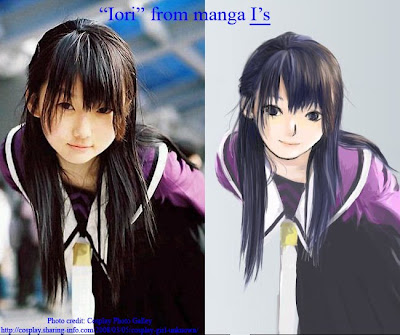
One of the unspoken rules for Japanese cosplayers is that once you have on your costume, you become the character. Consequently, many fans will spend weeks memorizing their persona’s favorite phrases and mannerisms, so that no matter what happens, they will be able to stay ‘in character.’

There is even a new organization forming in Japan called Cosengokai, to help out cosplayers who have been victimized. In mainstream Japanese culture, cosplay is looked down upon, and politely discouraged because it breaks the continuity of ‘the group.’
Some cosplayers have been stalked, usually by the photographers and some—especially the females—have been sexually harassed.

The other side of the imagined cosplay community are the Europeans and the Americans. In the West, while seen as somewhat silly, there is either a totally ignorance or indulgent acceptance of cosplayers. Being an individual is what is prized in most Western countries, so many of the strict Japanese rules of being totally ‘in character,’ are dropped or partially ignored. While many American cosplayers will make some effort to at least be able to mimic their personas’ signature pose, most cosplayers carry on acting like themselves once they are in costume.
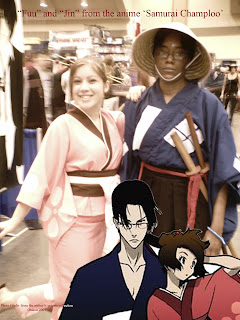
Usually, most American cosplayers meet once or twice a year at the various anime conventions around the country, which allows them ample time to complete their costumes. Unlike the Japanese, who’s costumes are often store bought and very intricately detailed, many American coplayer’s costumes are handmade, and the opportunity to show off their hardwork is highly prized. Since being in ‘the group,’ isn’t as important in America, many fans will attend the conventions either alone and seek out others from their chosen series for an informal photo shoot, or if they attend in a group, 90 percent of the time, everyone will be someone from a different anime, manga, or game. Even American comics, like Batman and Superman, movies like The Martix, and TV shows like Star Trek are all acceptable choices for gleaning cosplay inspiration.

For American and European fans, cosplay is a chance to show off an artistic skill, and have fun, where as the Japanese take it very seriously. Even being referred to as an Otaku or fanboy, while insulting to the Japanese, is a term worn with pride by the Americans and Europeans.

A lot of hard work, time, and money is invested in cosplay around the world, and even though East and West have different interpretations on the best way to behave once the new persona is taken on, there is still a deep sense of camaraderie and freedom.